
Cab Calloway was one of the most electrifying entertainers America ever produced. Born Cabell Calloway III on Christmas Day1907 in Rochester, New York he was raised primarily in Baltimore, Maryland, where his family relocated during his youth. He grew up in a talented household with one sibling, his sister Blanche Calloway who also became a successful bandleader and performer in her own right. Cab was married to Zulme “Nuffie” Calloway for decades until his death, and together they had one daughter, Chris Calloway, who later became a respected singer and actress. He died on November 18, 1994, in Hockessin, Delaware, at the age of 86, leaving behind a legacy of music, style, showmanship, and unmistakable American grandeur.
Today, his legacy is preserved through the organization Creative Arts Through Calloway. Various museum exhibits celebrate his extraordinary life, career, recordings, personal artifacts, photographs, and enduring influence on music, fashion, and performance. It stands as a fitting tribute to a man whose charisma could fill any room and whose silhouette remains instantly recognizable generations later.
Calloway did not ever merely enter a room. He conquered it. He was six feet of velocity, velvet, precision, and panache. A bandleader, singer, actor, and ringmaster of swing, Cab Calloway understood a truth many modern men have forgotten: clothing is not vanity. Clothing is language, intent, and self-respect made visible; a language Cab spoke fluently.
If the ordinary man wore a suit, Cab Calloway wore architecture. His famed “zoot suits” became legendary in the 1930s and 1940s: long jackets with sweeping drape, broad shoulders that made a doorway seem narrow, trousers full through the thigh and tapered sharply at the ankle, chains swinging like punctuation marks. He once described the zoot suit as “the ultimate in clothes,” and he was correct. These were not garments. They were announcements.
At a time when many Americans wished Black excellence to remain unseen, Calloway chose visibility. Where lesser men blended in, he amplified. Where drab society preferred humility, he offered grandeur. His tailoring was rebellion executed with needle and thread. Modern men should study this carefully. The true dandy does not dress to beg approval. He dresses to express sovereignty.
Then there was the hair… hair like patent leather. Calloway wore it immaculate, glossy, disciplined, sculpted into the polished sheen of the era’s most exacting standards. Not a strand seemed accidental. His grooming conveyed the same message as his wardrobe: details matter.
Today many men spend fortunes on watches while ignoring the condition of their shoes, their haircut, their posture, their skin. Cab knew better; style begins at the top and radiates downward.
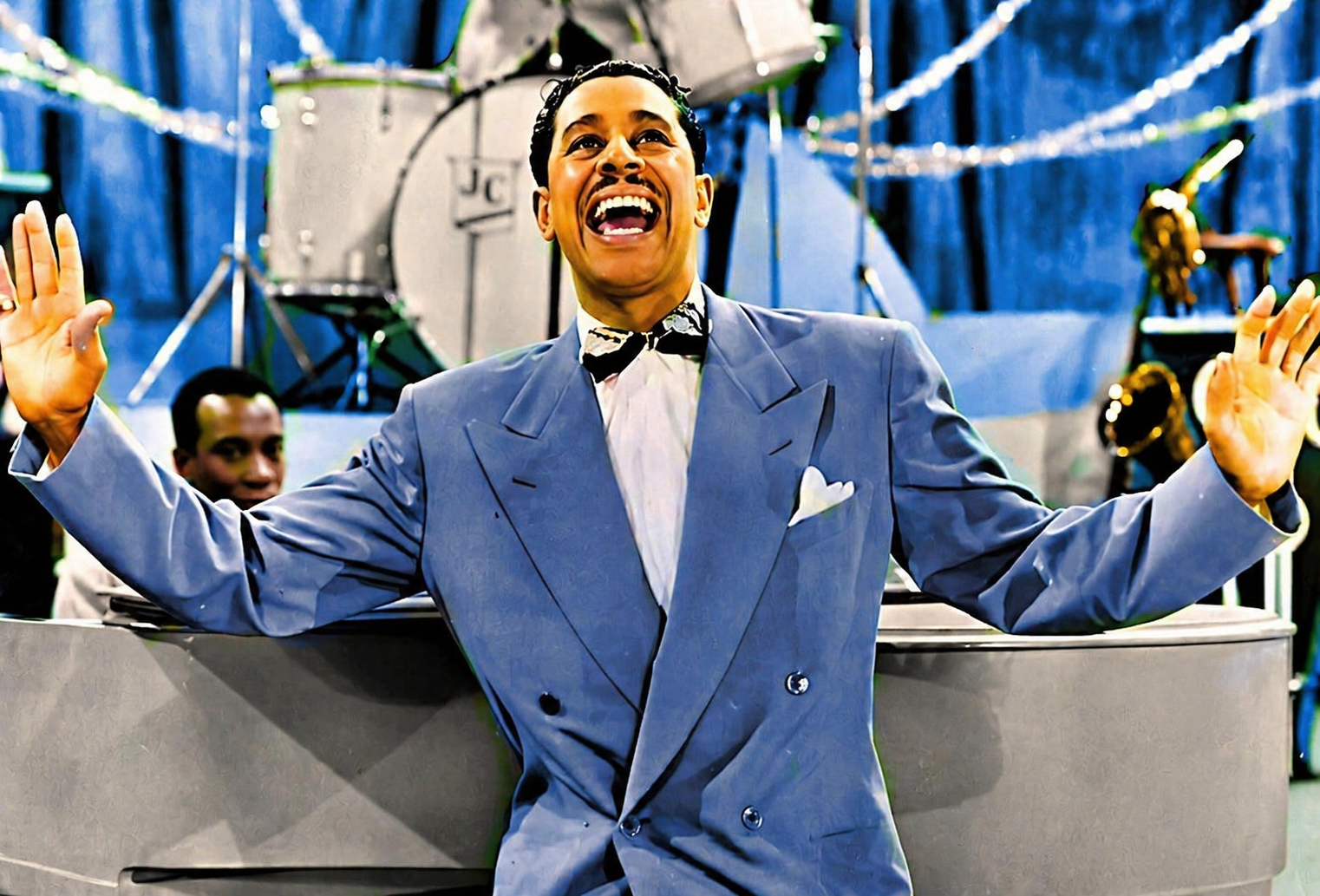
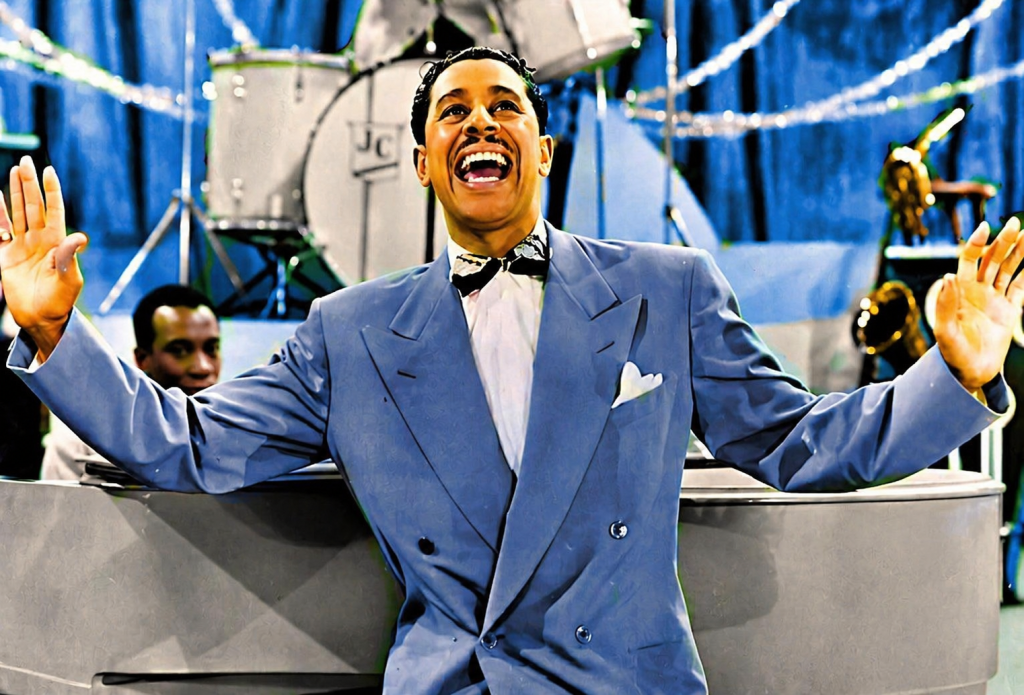
Most men wear clothing. Not Can. No, Can Calloway animated it. He announced it. He performed it. Watch the surviving footage. The white gloves slicing the air. The fingers snapping commands to the brass section. The knees bending like springs. The baton-like arms. The exaggerated stride. The sly grin that said he knew he was the most interesting thing in the room. He moved with the precision of a matador and the electricity of a thunderstorm.
Calloway’s genius was understanding that elegance is kinetic. A perfect suit on a lifeless man remains cloth. On Calloway, every lapel became choreography. He understood that the white tuxedo offered the subtle art of contrast. Though famous for flamboyant tailoring, Cab Calloway also mastered formalwear. Few men in history have worn a white dinner jacket with greater authority. Against dark stage backdrops and smoky nightclubs, the white tuxedo transformed him into a beacon. Black bow tie. Sharp pleats. Gloss shoes. Brilliant smile. Commanding silhouette. Many men today overdress poorly and underdress confidently. Cab dressed correctly and then wore it with daring.
He offered swagger without vulgarity. This is the distinction modern culture often misses. Calloway possessed swagger, but never sloppiness. Flash, but never chaos. Showmanship, but never desperation. He was vivid without being vulgar.
His look was masculine yet theatrical, refined yet joyful, meticulous yet exuberant. He proved that discipline and fun are not enemies. In fact, they are partners.
Here is what Stone Swank readers should emulate immediately; gentlemen should borrow five principles from Cab Calloway.
First: Dress with silhouette in mind. Clothing should shape presence.
Second: Grooming is non-negotiable. Hair and shoes reveal standards.
Third: Movement matters. Stand upright. Walk with purpose.
Fourth: Use one dramatic flourish. Only one. A pocket square, a bold lapel, a spectator shoe, shiny cufflinks. But not more than one.
Fifth: Joy is stylish. Sour men are never elegant. Everyone likes the happy guy, and Cab could not help but affect others with happiness as if it were a contagion.
Cab Calloway’s greatest legacy may not be a song, though “Minnie the Moocher,” which I urge my readers to listen to and watch his movements as he performs, remains immortal. His legacy is a reminder that style can be triumphant, long lasting, and powerful. He emerged in an era of obstacles and still chose magnificence. He met a world of limits with abundance. He answered grayness with color, stiffness with rhythm, and conformity with plume-tipped audacity.
America has produced many entertainers but so very few have produced a true Stone Swank worthy legacy of style. Cab Calloway did. And in an age drowning in mediocrity, his silhouette still towers above the crowd.