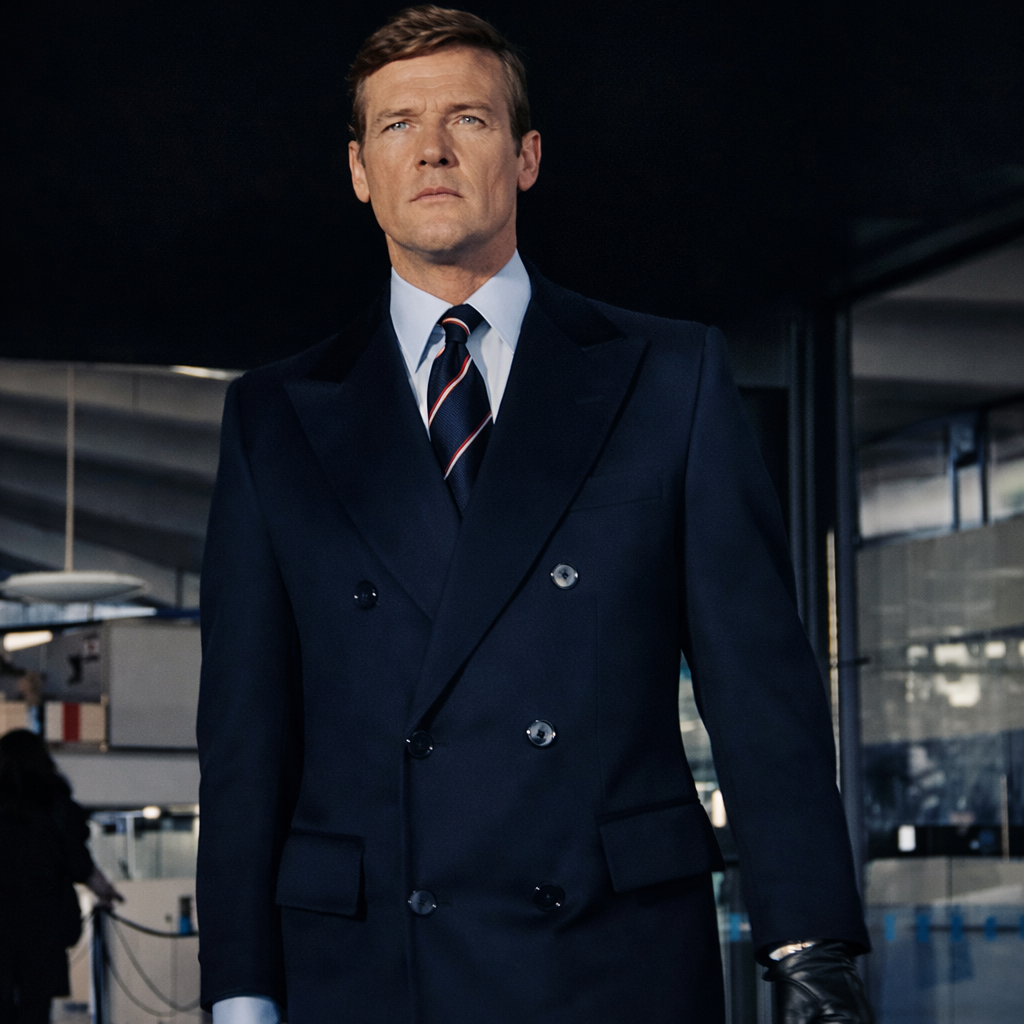

The Chesterfield is pure temptation, commanding attention with its knee-length silhouette, signature plush collar, and structured yet comfortable fit—a timeless emblem of formality and elegance in menswear. Crafted from rich wool in deep, refined shades like navy, grey, or black, this garment became the ultimate staple for gentlemen craving prestige, refinement, and raw practicality.
Unlike its predecessors, it ditches the defined waist seam entirely, granting fluid ease of movement while delivering a razor-sharp, polished look perfect for prowling urban streets or dominating formal nights.
There’s an undeniable alluring edge to the Chesterfield, its soft contrasting collar grazing sensually against the neck, the heavy wool cascading just right over broad shoulders before tapering to tease the body beneath, stirring a quiet, magnetic confidence that pulls eyes in smoke-filled lounges or mist-veiled alleyways.
Worn open to flash a hint of crisp shirt or loosened tie, or fastened tight against the bite of winter, it radiates restrained power—offering warmth, razor-sharp poise, and a whisper of mystery with every stride.
It ignited in mid-19th-century Britain, shattering convention by dethroning bulky relics like the over-frock coat. Debuting around the 1840s, this design signaled a bold pivot to cleaner, more modern tailoring that synced with the shifting Victorian aesthetic—prioritizing function without dimming style, turning it into the go-to layer over suits when the cold closed in.
Named for George Stanhope, the 6th Earl of Chesterfield—a sharp dandy, Tory politician, and Privy Counsellor—this overcoat channels the raw influence of British aristocracy on global trends. The Earl championed the style in the 1830s and 1840s, spotlighting that iconic velvet collar drawn from post-revolutionary French flair. His choices carved British fashion dominance amid upheaval, shifting from fussy Regency excess toward sleek Victorian restraint.
Through the late 19th century, the Chesterfield morphed into the ultimate badge of refined masculinity, available in single- or double-breasted cuts.
By the 1870s, knee-length with braided edges and silk facings, it was locked in as must-have outerwear for deals and dinners alike. Its adaptability allowed seamless fusion with rising lounge suits, cementing its place in daily formal rotation.
Entering the 20th century, this classic exploded in popularity from the 1920s through the 1960s, becoming essential gear for impeccably dressed men across every walk of life. In the post-World War II boom, it reigned as the default overcoat for tycoons, power players, and masters of swagger—layered over lounge suits or sharp tailoring in charcoal, navy, or black wool, its lush collar infusing subtle luxury. The piece flowed with fashion’s tide, holding elegant shape amid looser, more relaxed cuts.
The Teddy Boys of the 1950s gave it a fierce twist: a longer, fuller Drape version—often in bold pale blue or charcoal with plush accents—paired with ultra-slim drainpipe trousers, flashy waistcoats, and chunky creepers. This gritty street remix flipped the garment from elite symbol to emblem of youthful rebellion and working-class edge, keeping it alive and electric through post-war Britain.
That mid-century fire sealed its classic status, versatile enough for men and increasingly for women, who claimed tailored versions from the late 19th century onward for effortless elegance in motion, then owned it through the 1940s to 1960s in feminine lines or as bold reclaimed tailoring. From corner offices to rock stages, its pull proved unbreakable, fusing high polish with fearless adaptability.
Politically, the 6th Earl embodied its aura of command in London’s elite shadows. Woodrow Wilson wore it in office and abroad, with surviving pieces—one from post-WWI France—underscoring its diplomatic edge, merging American grit with European finesse.
Beyond power corridors, the Chesterfield crowns cultural icons. Roger Moore absolutely owned it in a navy double-breasted version—most memorably as James Bond in Live and Let Die (1973), where the coat’s sleek lines, velvet collar, and tailored power made his 007 debut irresistibly commanding and sexy, exuding that effortless, dangerous elegance that turned heads. In the 1960s and 1970s, Sinatra, the Chairman of the Board, pushed the coat to peak cool: classic lines fused with fedora, razor suits, and that effortless charisma on stage, in Vegas, everywhere he owned the room.
The Chesterfield stands as a pinnacle of refined menswear—elegant, structured, and timeless. The ideal shoes honor its formal heritage while sharpening that alluring edge: rich, polished leather with subtle gleam and razor-clean lines. Black or deep brown cap-toe Oxfords are the most lethal match, their closed-lacing precision echoing the coat’s restraint and luxurious collar, channeling Sinatra’s effortless Vegas stride. For sly versatility without losing formality, Derbies or sleek Chelsea boots in matching leather ground the look with quiet confidence and magnetic pull.
Today, the Chesterfield endures as a shape-shifting force that defies eras, calling to anyone who craves heritage laced with edge. From aristocratic shadows to world leaders and Rat Pack legends like Frank Sinatra and Sammy Davis Jr., it stands as proof: true icons don’t fade; in fact, they evolve, ignite, conquer in silence, and leave a trail of lingering glances that no one can quite shake.