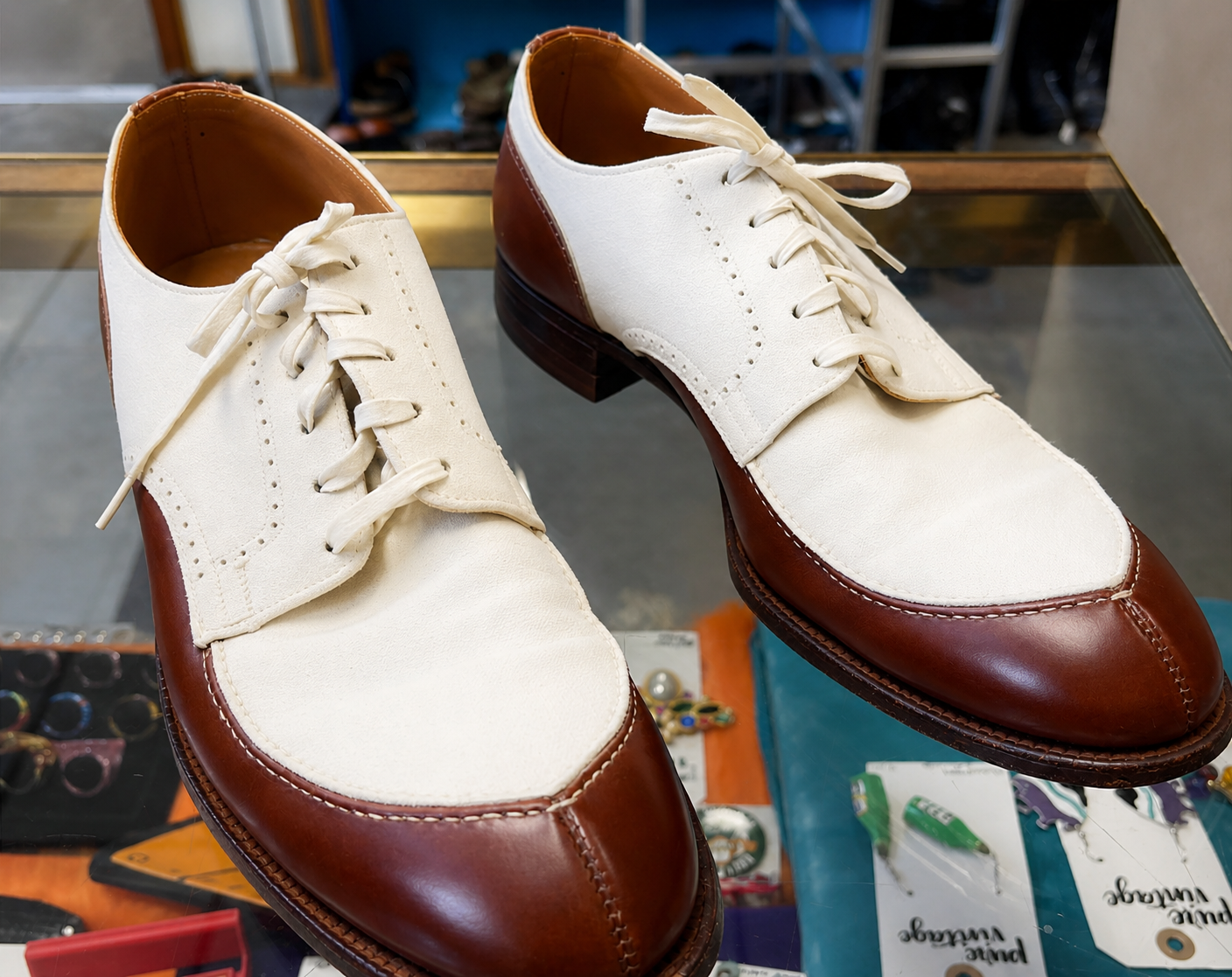

With Memorial Day approaching, every gentleman must understand and appreciate the Spectator shoe.
There are shoes that whisper and then there are shoes that announce themselves with the brazen confidence of a trumpet at a midnight jazz club. Spectator shoes do not politely enter a room. They arrive. They declare, with unapologetic éclat, that the man wearing them has no interest in sartorial anonymity. He is not here to blend into the upholstery. He is here to be seen.
To understand the spectator shoe is to understand a peculiar alchemy of utility, rebellion, and aristocratic leisure. Known in Britain as the co-respondent shoe, a moniker dripping with insinuation and scandal, it is a design that straddles propriety and provocation with remarkable dexterity. It is, at once, a gentleman’s shoe and a cad’s calling card.
The origins of this flamboyant contrivance are far more pragmatic than its later reputation would suggest; they were indeed not a product created during the Art Deco era, but that’s the era which popularized them. In 1868 the firm of John Lobb is widely credited with crafting a two tone cricket shoe intended to solve a pedestrian but persistent problem. All white footwear, though aesthetically pristine, was mercilessly betrayed by the English countryside. Mud, grass, and dust conspired to sully the appearance of even the most fastidious sportsman. Lobb’s innovation was elegantly simple. Reinforce the high wear areas, the toe cap and heel, with darker leather, thereby concealing the inevitable grime while preserving the illusion of immaculate dress.
From this utilitarian genesis emerged something far more intriguing. These two tone shoes migrated from the playing field to the sidelines, adopted by well heeled spectators who found in them a perfect synthesis of practicality and panache. The name spectator was thus not a mere description, but a social designation. These were shoes for men who watched, not labored. Shoes for those whose presence at the match was itself a kind of performance.
Their aesthetic lineage runs deeper still, drawing upon the brogue traditions of Ireland and Scotland, where perforated leather once served the decidedly unglamorous function of draining water from bog trodden footwear. In the spectator shoe, however, these perforations became purely decorative, an ornamental flourish that lent visual complexity and a certain rakish charm. The result was a hybrid, the structural dignity of the Oxford, the decorative exuberance of the brogue, and the visual audacity of contrasting color.
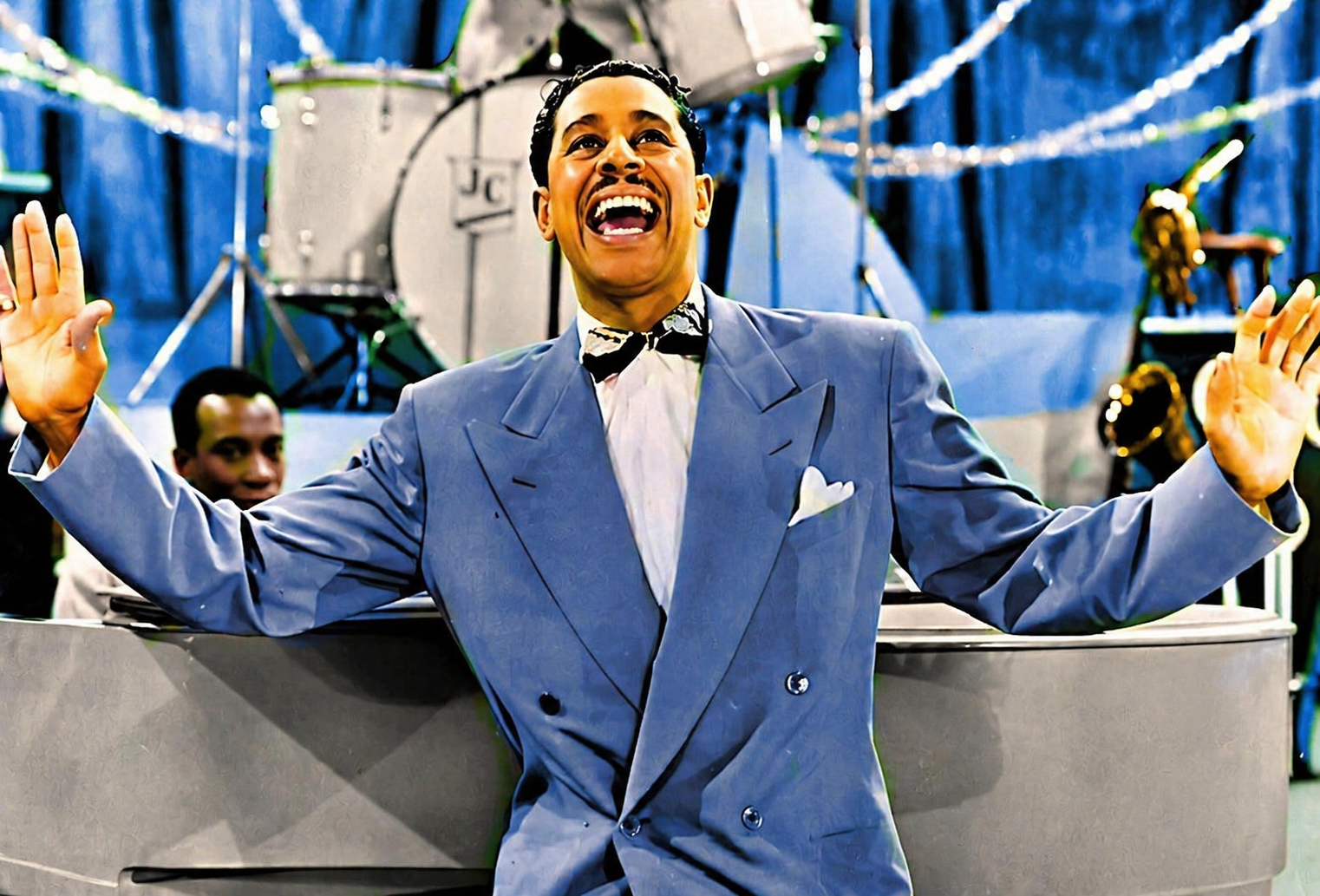
By the 1920s, this once practical sporting shoe had undergone a cultural metamorphosis. The Jazz Age, with its intoxicating blend of hedonism and modernity, proved the perfect crucible for the spectator’s ascendance. In the United States they became synonymous with the nocturnal pageantry of speakeasies, dance halls, and smoky, sultry cabarets. Jazz musicians, dancers, and the more flamboyant elements of society embraced them with fervor. They were light, they were striking, and they moved as effortlessly across a dance floor as a well timed trumpet solo. One need only conjure the image of Fred Astaire gliding across the screen, his feet a blur of elegance, to understand the spectator shoe’s apotheosis.
Here was footwear that did not merely complement motion but exalted it. Each step became a visual cadence, each pivot a declaration of style. Yet, as with all things that shimmer too brightly, there was backlash. In Britain, the nickname co-respondent shoe hinted at moral ambiguity. The term itself, borrowed from divorce law, referred to the illicit third party in an adulterous affair. To wear such shoes was, in certain circles, to flirt with reputational peril. They were seen as the footwear of lounge lizards, dandies, and charming reprobates, men whose elegance masked a certain ethical elasticity.
It was left to none other than Edward VIII, the Duke of Windsor, to rehabilitate the spectator shoe’s standing among polite society. The Duke, that perennial arbiter of masculine elegance and one of the world’s best known Nazi sympathizers, wore them with insouciant confidence, often at sporting events. His endorsement did not so much sanitize the shoe as elevate it, transforming it from a symbol of questionable taste into one of daring sophistication.
Across the Atlantic, the associations were more colorful still. The spectator shoe became entwined with the mythology of the American gangster, figures like Al Capone, whose sartorial choices were as conspicuous as their enterprises were clandestine. In this organized crime milieu, the shoe’s bold contrast mirrored the stark dualities of the age, legality and lawlessness, elegance and excess.
The 1930s marked the zenith of the spectator’s popularity, an era when Art Deco aesthetics and dandyism converged in a celebration of visual opulence. Yet the outbreak of World War II brought this exuberance to an abrupt halt. Wartime austerity, material rationing, and a cultural pivot toward sobriety rendered such flamboyance untenable. The spectator shoe, once a symbol of carefree elegance, retreated into the shadows.
And yet, like all great artifacts of style, it refused extinction. It resurfaced in various guises over the decades, adopted by rock and roll iconoclasts, revived by retro enthusiasts, and cherished by connoisseurs of classic menswear. It remains, to this day, a niche but potent emblem of individuality.
Modern iterations, crafted by houses such as Crockett and Jones and Church’s, preserve the essential DNA of the original while refining proportions and materials for contemporary sensibilities. They are most at home in warm weather, paired with linen, seersucker, or any ensemble that invites a touch of sartorial bravura.
Let us be clear. The spectator shoe is not for the timid. It is not for the man who does his best to be invisible. It is not for the man who seeks refuge in anonymity. It is not for the man who trembles at the prospect of attention. The spectator show is for the man who understands that clothing is not merely functional but rhetorical. That what one wears is, in its own way, a form of speech.
In an age of homogenized “metrosexual” fashion and algorithmic taste, the spectator shoe stands as a defiant anachronism, a relic of a time when men dressed not merely to comply, but to captivate. To wear them is to participate in a lineage that stretches from cricket fields to cabarets, from royal enclosures to smoky backrooms. They are, quitsimply, the footwear of a man who refuses to be overlooked.