
The tuxedo was born because one man grew tired of being uncomfortable. Before the tuxedo existed, elite men spent their evenings imprisoned inside stiff black tailcoats, heavily starched collars, and layers of ceremonial fabric designed more for endurance than enjoyment. Victorian eveningwear looked formal, but it moved like armor.
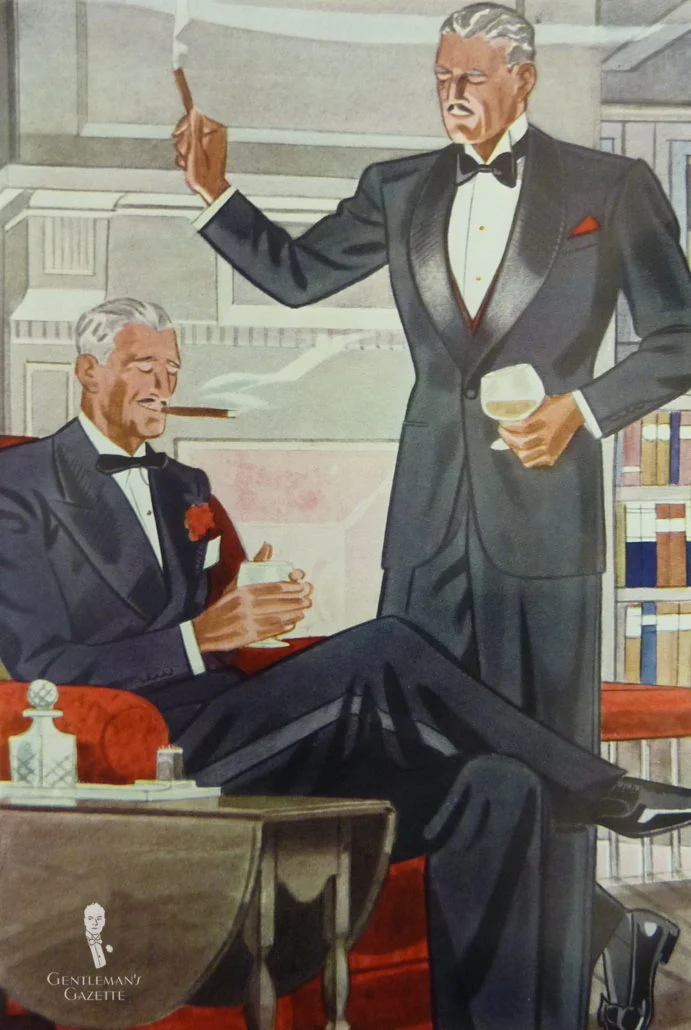
The future King Edward VII of Britain, then the Prince of Wales known as “Bertie,” decided elegance did not have to feel like punishment. In 1865, he commissioned the famed Savile Row tailoring house Henry Poole & Co. to create a shorter, tailless evening coat for private dinners at Sandringham House. The original design was reportedly made in celestial blue silk. That single decision altered men’s fashion permanently. The garment became known as the “dinner jacket.” Its ancestry also drew from the smoking jacket, the relaxed garment aristocratic men wore after dinner while retreating to cigar and brandy rooms. Even today, in parts of Europe, the tuxedo is still referred to simply as a “smoking.” At first, the dinner jacket remained an aristocratic novelty. It was intended for private dinners, country estates, and intimate gatherings rather than grand public occasions. Traditional white tie attire still ruled formal society. But style has always spread downward from royalty and the upper classes.
The dinner jacket arrived in America in 1886 when millionaire James Brown Potter and his wife Cora visited England and met the Prince of Wales. Bertie recommended the new evening coat. Potter had one made by Henry Poole and brought it back to New York. That same year, the jacket caused a sensation at the exclusive Tuxedo Club in Tuxedo Park, New York. It was the playground of America’s Gilded Age elite. According to legend, Griswold Lorillard appeared at the club’s Autumn Ball wearing a tailless black evening jacket with a scarlet satin vest instead of the expected tailcoat. Traditionalists were horrified. Young men immediately wanted one. The garment soon became associated with Tuxedo Park itself, giving America its permanent name for the dinner jacket: the tuxedo.
What began as relaxed British aristocratic eveningwear rapidly evolved into the defining symbol of masculine sophistication. By the early twentieth century, the tuxedo had become standard semi formal attire throughout Britain and America. Black replaced midnight blue as the dominant color, black bow ties replaced white, and the “black tie” dress code emerged as the elegant middle ground between rigid white tie formality and ordinary business attire.
Hollywood elevated the tuxedo into legend. Fred Astaire moved through a dinner jacket with impossible grace. Cary Grant wore one with almost mathematical precision. Gary Cooper transformed black tie into understated American masculinity. The tuxedo no longer belonged merely to aristocrats. It became the aspiration of businessmen, actors, politicians, and ordinary men seeking refinement.
Its enduring brilliance lies in simplicity. Peak lapels projected authority. Shawl collars conveyed continental ease. White dinner jackets flourished in tropical climates and among men confident enough to wear them properly. Yet the essential formula never changed because perfection rarely requires revision.
The tuxedo succeeded because it balanced comfort and discipline simultaneously. It removed the stiffness of Victorian formalwear without surrendering elegance altogether. It allowed men to appear sophisticated without looking like they were attending a state funeral. Modern culture has spent decades dismantling standards of male presentation. Sneakers now appear at weddings. Baseball caps invade restaurants once governed by dress codes. Casualness has become a kind of social ideology. The tuxedo remains one of the final surviving acts of civilized resistance.
A proper dinner jacket changes a man instantly. Shoulders straighten. Conduct improves. Speech becomes more deliberate. Elegance imposes discipline, and discipline shapes behavior. That was true in the smoking rooms of Victorian England. It was true in the ballrooms of Tuxedo Park. It remains true today.