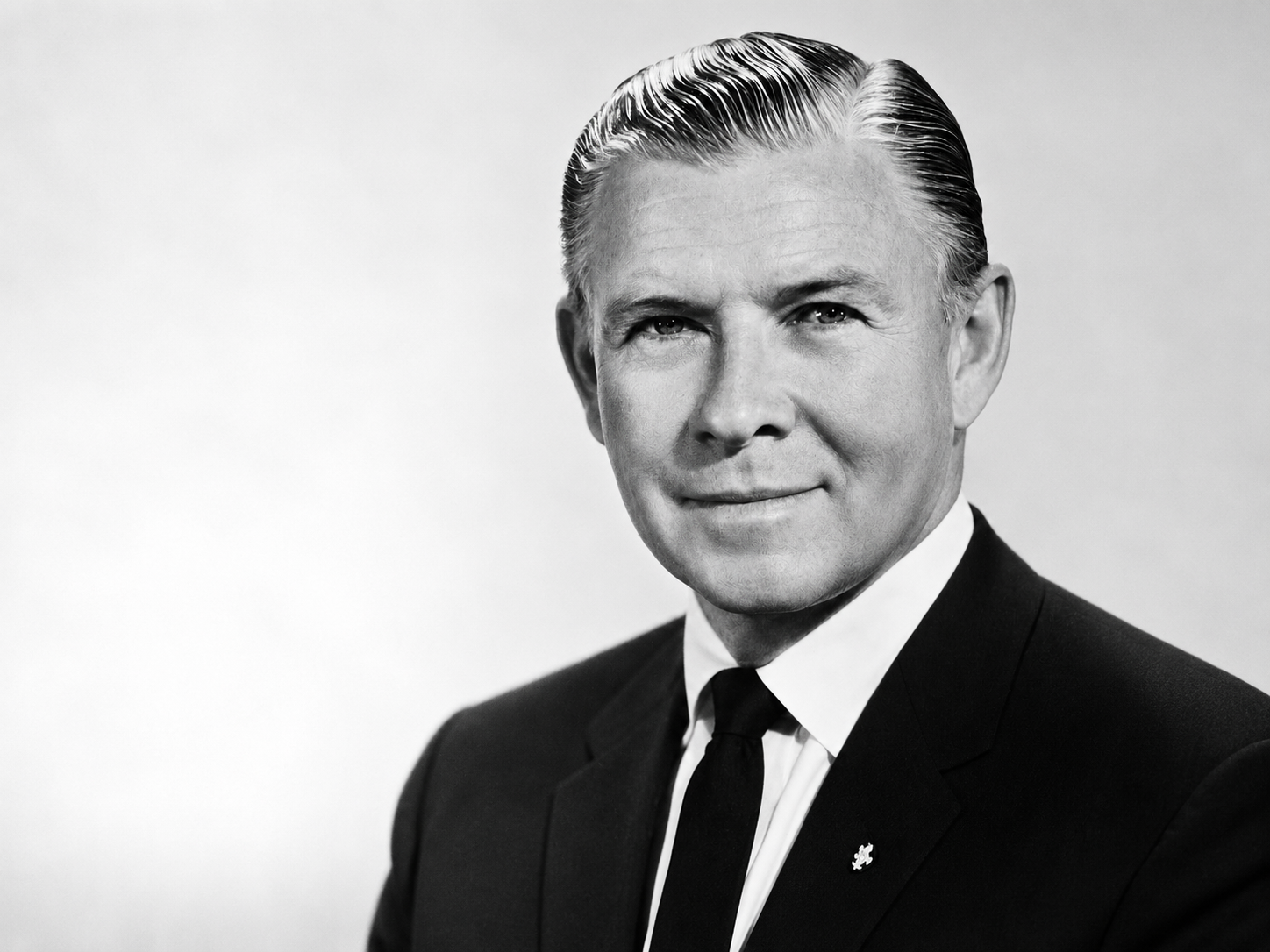

There are men who wear clothes, men who are worn by clothes, and then the exceedingly rare specimen who animates cloth itself. George Murphy belonged to that vanishing fraternity. He did not merely don a tuxedo. He electrified it. He did not simply enter a room in a suit. He converted the room into a stage and everyone present into an audience. In our vulgar and slovenly age, where too many men confuse negligence for authenticity and sloppiness for confidence, the memory of George Murphy arrives like a brass fanfare cutting through fog.
Born on Independence Day in 1902, George Lloyd Murphy seemed predestined for an American life of buoyancy, polish, and enterprise. The son of famed athletic trainer Mike Murphy, he inherited posture, discipline, and the instinct that the body itself is an instrument. He attended elite schools, drifted through assorted occupations, and then found the métier for which Providence had tailored him. Broadway first. Hollywood next. Washington thereafter. Song and dance man. Screen Actors Guild president. United States Senator from California. Only George Murphy could move from top hat to Senate chamber without appearing to have changed costume at all.
Murphy’s political victory was not merely unusual. It was historic. In 1964, the same year Barry Goldwater was being buried in California by a landslide, George Murphy defeated appointed United States Senator Pierre Salinger, the former press secretary to President John F. Kennedy. That was no small feat. California had seen other famous performers attempt the leap from marquee lights to public office. Shirley Temple ran for Congress and lost. Helen Gahagan Douglas, an actress of real distinction, ran for the United States Senate and lost. Murphy won.
That victory made Murphy something more than a song and dance man with political opinions. It made him the advance guard of a cultural and political migration that would soon change American conservatism. His 1964 Senate triumph preceded Ronald Reagan’s election as Governor of California in 1966, proving that Hollywood polish, patriotic conviction, and political discipline could be fused into a winning public persona. Murphy did not merely open the door for Reagan, he put a shine on the brass knob.
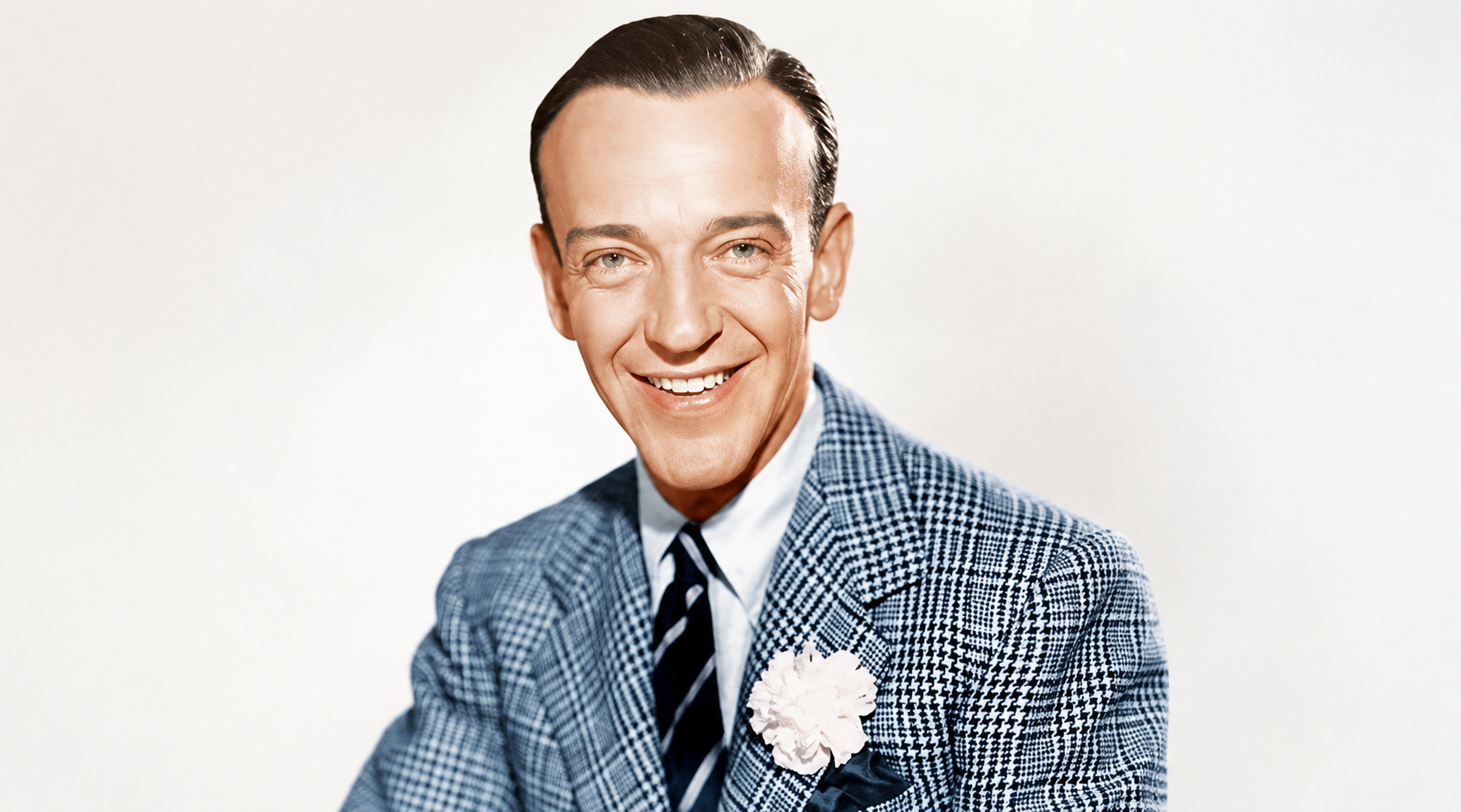
Watch Murphy in the great musical spectacles of the era and one sees immediately the distinction. Fred Astaire floated like mercury. Gene Kelly attacked space like a cavalry charge. George Murphy possessed something different. He moved with jaunty authority. There was an Irish sparkle to him, a cheerful pugnacity, a rhythmic confidence suggesting that if a fight broke out he could win it, then apologize charmingly, then lead the room in chorus.
His clothes were built for this kinetic temperament. White tie and tails on lesser men can resemble funeral upholstery. On Murphy they became banners of celebration. The black tailcoat would flare at the precise moment of a turn, the satin lapels catching studio light like polished obsidian. White waistcoat immaculate. Shirtfront rigid as marble. Trousers cut clean and long, breaking just enough to preserve line while allowing rapid footwork. Patent shoes snapping against the floor with the punctuation of a typewriter.
He understood that evening dress is not static formality. It is architecture in motion.
In productions such as Broadway Melody of 1938 and Broadway Melody of 1940, Murphy moved amid giant staircases, mirrored sets, chorines, orchestras, and all the grandiose machinery of studio fantasy. Yet he never disappeared into the scenery. His costume always framed the action. A top hat tilted just so became punctuation. White gloves became instruments of gesture. Cane work, hand placement, turns of the shoulder, and angled glances were all heightened by the precision of dress. He used accessories as a conductor uses a baton.
That is a lesson modern men have forgotten. Accessories are not ornaments. They are signals.
Murphy’s hats deserve particular mention. Whether silk topper, fedora, or later the navy beret he was seen wearing in maturity, he understood that headwear must complement facial structure and temperament. On some men a beret suggests affectation. On Murphy it suggested command. On some men a top hat looks rented. On Murphy it looked hereditary.
Then there were the suits. Public records seldom preserve brand labels, but one need not possess the tailor’s ledger to recognize the species. He wore garments from the best traditions of American and custom tailoring. Strong but natural shoulders. Trim waist suppression without theatrical pinching. Trousers with room enough to stride, never the strangulated tubes modern men mistake for elegance. Fine wools in navy, charcoal, and gray. Crisp shirts with proper collars. Ties that framed rather than screamed. He likely favored the sort of houses where craftsmen measured a man’s posture as carefully as his chest.
Murphy’s genius lay in understanding that clothing must serve movement. He had the instincts of an athlete. Jackets were cut to permit arm extension. Trouser seats allowed bend and turn. Sleeve pitch aligned with natural motion. He knew that if cloth binds, grace dies.
Too many modern wardrobes are mausoleums of vanity. Murphy’s wardrobe was a fleet of racing yachts.
Even in later life, silver haired and statesmanlike, he retained the unmistakable gait of a dancer. Some men walk as though apologizing to the floor. Murphy advanced with intention. One can almost hear the phantom orchestra. The suit moved because he moved correctly within it. This is why an ordinary man in expensive clothes still appears ordinary, while a disciplined man in sound clothes can appear magnificent.
His political style was as deft as his sartorial style. He became the first major actor elected to statewide office in California, clearing a path later widened by Ronald Reagan. When Reagan was sworn in as governor at the stroke of midnight due to Nancy Reagan’s faith in astrology, he reportedly turned to Murphy and quipped, “Well George, here we are on the late show again.” It was perfect. Two veterans of timing, stagecraft, and audience awareness acknowledging that politics itself had become theater.
Yet Murphy never descended into buffoonery. That is the distinction between showmanship and clownery. He possessed charm without frivolity. Elegance without vanity. Humor without self abasement.
His grooming was equally exacting. Hair controlled but never lacquered. Face clean shaven and alert. Shoes polished to military brilliance. Pocket squares restrained. Jewelry minimal. He knew that the objective was not decoration but coherence. Every element spoke the same language.
Modern men searching for instruction would do well to study George Murphy. Wear clothes that permit action. Favor fit over logos. Let posture do half the tailoring. Use accessories sparingly but decisively. Understand that confidence is communicated by ease, not noise. And remember that the room notices how you enter long before it hears what you say.
George Murphy remains the only United States Senator with a star on the Hollywood Walk of Fame. That curious fact is more than trivia. It is emblematic. He stood astride two realms now thought incompatible: glamour and governance, style and substance, entertainment and seriousness. In truth they were never incompatible at all when inhabited by a man of discipline. Many men have worn tuxedos. Many men have held office. George Murphy did something far more difficult. He made excellence appear effortless and the impossible seem possible.
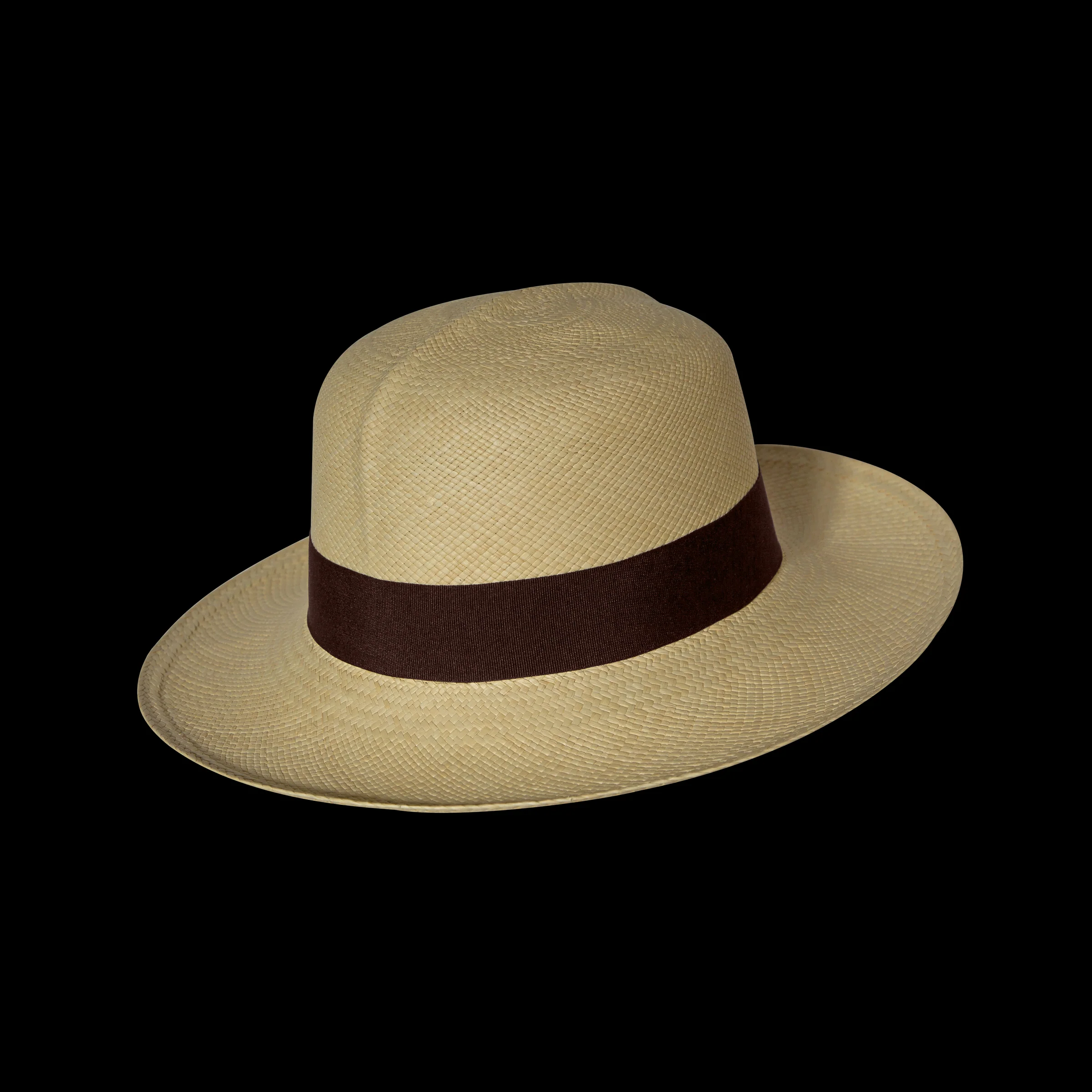
The Origins of the Panama Hat – A Gift From the Ecuadoreans
The Origins of the Panama Hat – A Gift From the Ecuadoreans Conventional wisdom would suggest that the Panama Hat